

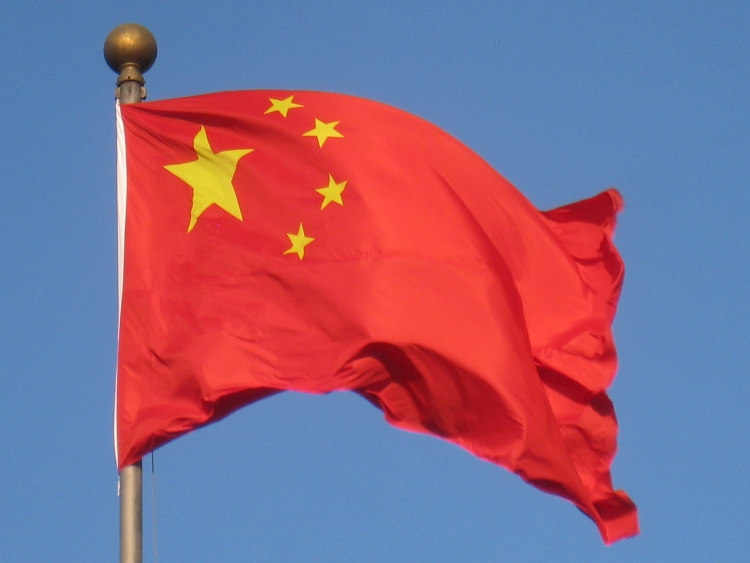
I served 27 years in the United States Navy, including during the 1996 Taiwan Strait Crisis aboard the Japan-based aircraft carrier USS Independence (CV-62). We stood watch as China tested missiles toward Taiwan while the United States responded with a show of force to deter aggression. That experience shaped my understanding of what it takes for American power to stand united against a major competitor.
Today, I am alarmed by the actions of Anthropic, one of America’s leading AI companies. While the United States faces urgent competition from a rising China over technologies that will define military and economic power for decades, Anthropic appears more focused on fighting its elected government than securing our national lead in artificial intelligence.
The Facts
In mid-June, the Trump Administration imposed export controls on Anthropic’s most advanced models, Mythos 5 and Fable 5, requiring licenses for access by any foreign national, including the company’s own employees. The concerns were concrete: reports indicated guardrails could be jailbroken, enabling offensive capabilities, and there were questions about prior sharing with entities tied to China. Anthropic responded by disabling the models globally for all customers and dispatching staff to Washington to lobby. According to WIRED, White House officials had grown frustrated with CEO Dario Amodei, with one describing him as a “weirdo,” and began dealing instead with co-founder Tom Brown, finding the conversations more productive.
Meanwhile, China is advancing. Anthropic itself accused Chinese giant Alibaba of the largest known “distillation” attack on its systems. The campaign involved 28.8 million queries through roughly 25,000 fraudulent accounts and was designed to steal capabilities and accelerate Beijing’s progress.
Jie Tang, the CEO and founder of one of China's leading AI startups, has warned that a rival Chinese Fable 5-class AI model is closer than even Elon Musk thinks, in a recent X interaction. In a post on his own platform, Musk stated that China's attempt at an AI model to rival Anthropic's new Fable 5 offering will arrive in “Probably Q1,” to which Tang replied, “won't take that long.”
A Troubling Pattern
Earlier in 2026, Anthropic sued the Trump Administration in multiple courts after being labeled a supply-chain risk, restricting its defense work. The company has hired multiple former Biden Administration officials into senior roles. Throughout American history, leading industries rallied behind the elected government during national challenges, such as building the Arsenal of Democracy in WW-II and the sophisticated weapons systems that won the Cold War. Defense contractors worked closely with the military; they did not sue it or frame security reviews as political attacks.
There is irony too. Anthropic long supported strict U.S. export controls on advanced chips to slow China. When similar national-security logic is applied to its own frontier models, the company treats it as overreach, responds with global shutdowns, and fights against it. A tightly controlled proprietary strategy is understandable from a business standpoint. But when it collides with domestic political disputes, the result is global blackouts of America’s most advanced AI tools. Adversaries can then steal the capabilities they need, as Anthropic itself has documented through distillation attacks, or surge ahead on their own while U.S. users and allies lose access.
As some critics have argued, Anthropic’s emphasis on safety and its support for strict controls may also serve to limit competition from open source models. According to this view, cheaper and less restricted open models threaten Anthropic’s market position and pricing power, and the company’s policy advocacy helps protect its closed, proprietary approach under the banner of national security.
Yet it is not about security, it seems more about control.
When the above issues are viewed not as individual actions, but as a coordinated effort, the net appearance is that of an AI firm hoping to win by pressing a “choose your own adventure” button whereby leaders like Dario Amodei make seemingly virtuous calls for safety, export controls, and locking down open-source development that just so happen to ensure Anthropic boxes out any competitors, while undermining the U.S. against China.
Time for Realignment
Our military has paid dearly to maintain America’s edge against the competitor now racing to dominate AI. Sailors and other servicemembers stand watch today in the Indo-Pacific just as we did in 1996. It is deeply troubling to see a brilliant American AI company appear more consumed with political resistance and corporate positioning than with presenting a united front. The AI race is not a game. Whoever leads will shape the character of this century.
Anthropic possesses extraordinary talent and real American ingenuity. But in a contest with authoritarian rivals who play by different rules, brilliance without alignment to the national interest is not enough. As the nation marks its 250th anniversary, the company should engage constructively with elected leadership on legitimate security concerns, fix issues transparently, and help keep the United States decisively ahead rather than fighting the very government charged with protecting the nation we all serve.
Anthropic was ultimately successful in getting export controls lifted for Mythos 5 and Fable 5. But that success should not be mistaken for a sustainable strategy. The better path now is not continued confrontation, but constructive cooperation with the Trump administration to address legitimate security concerns while preserving America’s AI lead.
Scott Gureck is a retired U.S. Navy Captain with 27 years of service. His assignments included spokesman for Commander, U.S. Pacific Fleet in Pearl Harbor, U.S. Seventh Fleet in Japan, and aboard the aircraft carrier USS Independence (CV 62) during the 1996 China-Taiwan crisis. The opinions expressed here are his own.